

Your body is really good at keeping you alive, but it needs constant maintenance to accomplish that. The cells that make up your bones and organs are perpetually dying and being replaced, that’s why you need a constant supply of nutrients and minerals to keep it replenished. The only way to get the raw materials that you need to persist for a few more days is from food. What you put into your body is important. That’s why if you want to eat healthy, you need to know the bare minimum about nutrition.
Digestive system
All nutrition starts and ends with the digestive system, the body system responsible for transforming food into nutrients the body can use and then getting rid of whatever’s left. At its crudest you can think of it like a tube that extends from your mouth to your butt.
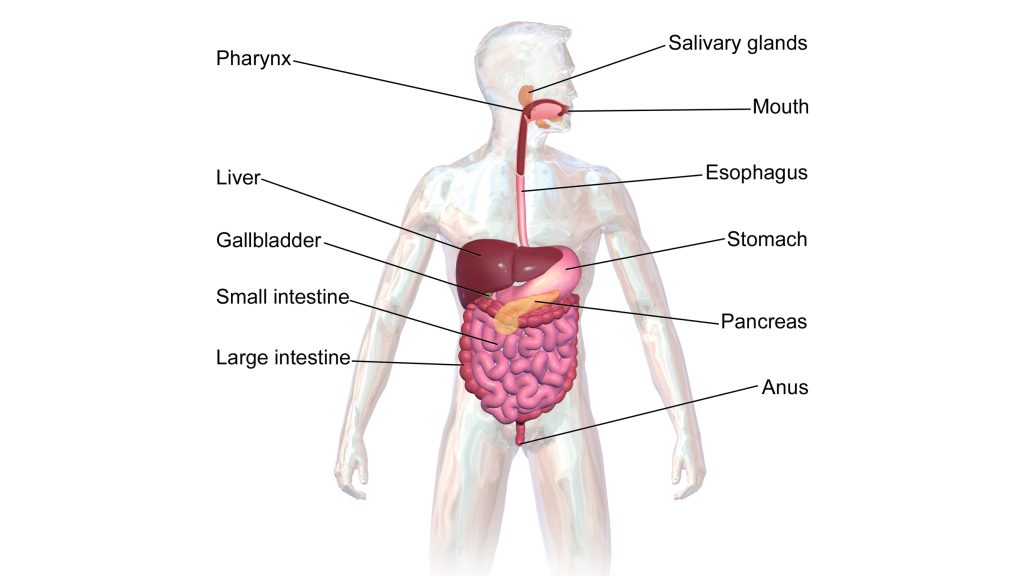
Digestion begins in the mouth where your teeth crush and tear your food into a mass called a bolus. The bolus is moved by the tongue down the throat and esophagus. The esophagus has specialized muscles that push the food down to the stomach where the bulk of the chemical digestion process occurs. The food that was mashed into a bolus is converted into chyme by the powerful acids in the stomach, then passed to the small intestine.
The small intestine is where most of the nutrient extraction occurs. The first bit of the intestine is called the duodenum and it’s where enzymes from the pancreas break down proteins and bile from the liver emulsifies fat. There are also specialized glands that neutralize the stomach acids. From here the chyme moves into the jejunum where all of the useful bits are absorbed into the bloodstream through the intestinal walls. The final stretch of intestine is called the ileum, and it handles the absorption of final nutrients before the remaining liquid is sent to the large intestine.
The primary job of the large intestine is to extract the water from whatever’s left of the chyme, but it also has a role to play in absorbing nutrients. Once everything that can be used has been extracted, whatever’s left is stored in the large intestine as stool before being disposed of via defecation.
Water

Water is the most essential of all the nutrients. Your blood is mostly water as is the interstitial fluid, both of which serve as transportation conduits for all of the other nutrients your body needs to survive. Basically, water is the solvent in which your body’s necessities are transported. Whereas you can survive without food for about a month, you can only survive without water for three days. Water is the foundation upon which all nutrition rests.
Macronutrients
The body needs a lot of different things to maintain itself, but of all the components that you ingest (excluding water), three are more important than the rest and your body needs them in greater volumes than everything else. These big three nutrients — carbohydrates, fats, and proteins — are called macronutrients and they’re the ones you should pay the most attention to. To make a complicated topic more simple, carbs are your short-term energy source, fats are your long-term energy source, and proteins are the building blocks for much of your body.

Micronutrients
At the other end of the scale are micronutrients, so called because your intake of them should constitute around 3% or less of your dietary intake. But just because these nutrients have a diminutive name doesn’t mean that they aren’t important for your health. As an example, not getting enough of the micronutrient vitamin C can lead to scurvy. Micronutrients are broken up into two categories. Minerals are mostly raw elements like calcium and iron, but salt counts as well. Vitamins, on the other hand, are organic compounds made by plants and animals, although you can also get your vitamin D directly from the sun.
Nutrition is a complicated topic
Anything less than a book on nutrition can only hope to scratch the surface of the topic. That’s because there’s no single best diet for every person, and everyone is going to have individual needs that can dramatically influence their nutritional requirements. Strength trainers and body builders are going to need more protein in their diet. Runners will need to eat more carbs. The only ones who are going to know what you should be eating are you and your doctor.