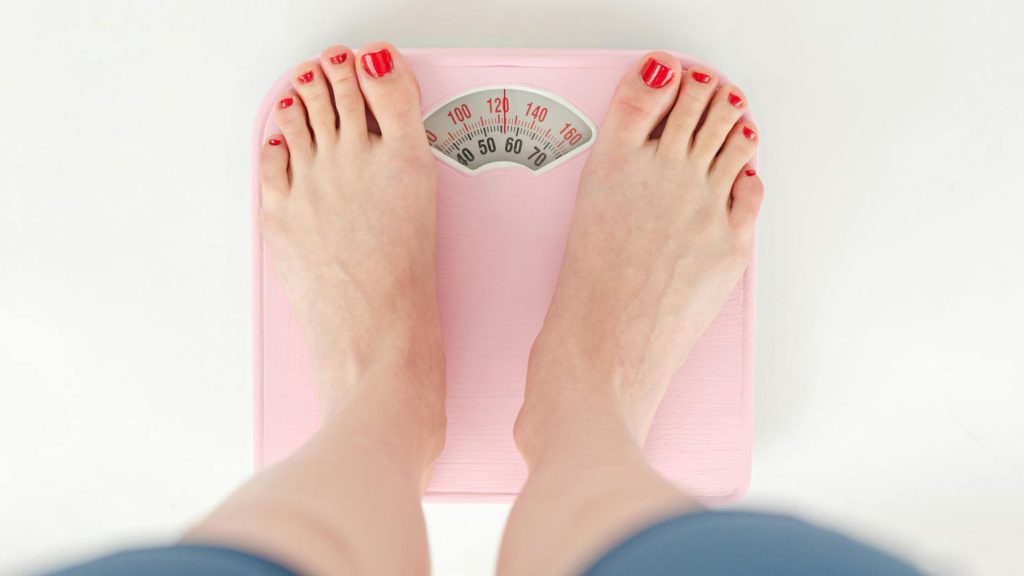

Although the term “body mass index” entered the lexicon in 1972, the measurement of the ratio of one’s weight in kilograms to the square of their height in meters has been around since 1832. The ubiquitous health ratio was conceived by a Belgian polymath who used it to broadly categorize groups of people based on their weight relative to their height.
In the 1950s insurance companies began to notice that policy holders who had lower weight-to-height ratios lived longer than their peers with higher ratios. When Ancel Keys coined the now-famous term, he intended it to be used for population studies, not as a metric of individual health. Of course today, if you’re overweight, your doctor will be sure to inform you of your BMI and your need to get it lower. So what’s the point of BMI, and is there anything better?
Why BMI has stuck around
The simple answer to why BMI has stuck around is because it’s good enough and it was better than any of the popular alternatives studied back in 1972. Keys compared BMIs to fat density and concluded it was sufficiently useful to categorize broad swaths of people. And there is some utility to BMI as a personal health metric. In 2009 The Lancet published a meta-analysis involving nearly 900,000 individuals and found that all-cause mortality was lowest for those with a BMI between 22 and 25 kg/m², perfectly inline with the consensus between CDC, NIH, and WHO.
| Underweight | <18.5 |
| Healthy weight | 18.5–24.9 |
| Overweight | 25–29.9 |
| Obese | ≥30 |
Height
Weight
Body Mass Index
Why BMI needs to go
Despite this utility, there are some things that BMI either can’t do, or is really bad at. One glaring weakness of BMI is its inability to describe the distribution of fat on a body. And it turns out where you’re holding your fat is really important. A 2004 study involving nearly 15,000 participants looked at the power of waist circumference (WC) and BMI — together and separately — to predict health outcomes. While both measures can be predictive of adverse health outcomes, WC was better at explaining obesity-related health risk. In other words, a beer gut is worse for you than thunder thighs, but BMI has no means to account for this difference.

Another major shortcoming of BMI is that it only has a casual relationship to body fat percentage (BF%). It’s fairly easy to imagine a body builder with significant muscle mass and low body fat having a BMI equal to someone who is considered overweight. This example is definitely an outlier, but it clearly illustrates the point that while BMI is correlated with body fat percentage, it’s not the best way to quantify it.
Even among large groups, the correlation can be loose. One study from 2023 with over 1,100 Indian participants showed that BMI was a better predictor of BF% among women and among the middle aged of both genders. A similar study in South Korea analyzed a population of over 18,000 and found a similar correlation between BMI and BF% among women, but also found that the correlation weakened with age. Further, it found that the correlation was different between different ethnic groups, with the correlation being weaker among Koreans compared to Americans.
What are the alternatives to BMI?
Since we know that BMI isn’t a good metric to assess individual health as it relates to body fat, what else is there? Almost all the research on the predictive power of different adiposity indices suggests that an index grounded in WC is superior to BMI in almost every context. A 2025 study looked at BMI and four WC-based metrics to test their capacity to predict type 2 diabetes risk among nearly 7,500 participants. Even though BMI is useful for assessing diabetes risk, the WC-based measurements were better every time.

So what are these measurements, and is this the kind of thing you can do at home? The simplest one is raw WC. Wrap a flexible tape measure around your waist at the same height as your belly button and you’re done. In general, men should have a waist slimmer than 94 cm, and women should be slimmer than 80 cm. Up to 102 cm and 88 cm is considered overweight. The biggest drawback to WC is it doesn’t account for height, with taller people naturally having a larger waist.
Waist-to-height ratio
An easy way to account for this height problem is to use it in your metric, and that’s what the waist-to-height ratio (WHtR) does. Take your WC and divide it by your height (just use the same units). This measurement has slightly more utility than both WC and BMI, it’s unit agnostic (works with meters, centimeters, or inches), and it’s easy to crunch the numbers. Your target WHtR should be between 0.4 and 0.5. Up to 0.6 means you’re at increased risk of adverse health outcomes, and above 0.6 means you’re at high risk.
Waist-to-height0.5 ratio
Another popular alternative takes the ratio of WC to the square root of height (WHt.5R), which better accounts for height, is slightly better at predicting cardiometabolic risk, and is relatively easy to calculate. When measured in inches, men should aim to keep their WHt.5R below 4.2 and no higher than 4.6. Women should aim to stay below 4.03 and no higher than 4.43.
Waist-to-hip ratio
The waist-to-hip ratio (WHR) abandons height altogether and just compares your gut and your butt. Men should endeavor to keep this number below 0.9 and women below 0.8. Between 0.9 and 1.0 is considered overweight for men, and between 0.8 and 0.85 is overweight for women.
Body roundness index
The body roundness index (BRI) estimates body fat and health risk based on the shape of the body. It only relies on WC and height, but its math is much more complicated than many of the other more popular indices. An ideal range is between 3.4 and 5.5, and up to 6.8 is considered overweight.
The body index science is far from settled
That’s a lot of indices out there to quantify your health and this list is just scratching the surface. All of the metrics that we’ve listed here have been validated as predictive measures for various diseases, but no single one is the best for every person at every age. Still, if we had to pick just one alternative to BMI, we’d go with WHtR. There’s no complicated math involved, it works in both imperial and metric units, and it’s a better predictor of health outcomes than BMI.